Welcome to your ultimate guide on Azure Resource Manager (ARM). If you’re diving into Microsoft Azure, understanding ARM is not just helpful—it’s essential. Think of it as the backbone of your cloud infrastructure, giving you control, consistency, and automation like never before.
What Is Azure Resource Manager (ARM) and Why It Matters

Azure Resource Manager (ARM) is the deployment and management service for Azure. It serves as the control plane that allows you to create, update, delete, and organize resources within your Azure environment. Whether you’re launching a virtual machine, setting up a storage account, or configuring a virtual network, ARM is the engine behind the scenes.



The Evolution from Classic to ARM
Before ARM, Azure used a deployment model known as “Classic.” In this older model, resources were managed in isolation, making it difficult to apply consistent policies, track dependencies, or manage resources at scale. Each service operated in its own silo, leading to fragmented management and deployment challenges.
Azure Resource Manager (ARM) – Azure Resource Manager (ARM) menjadi aspek penting yang dibahas di sini.
Microsoft introduced ARM in 2014 to solve these issues. ARM brought a unified, declarative approach to resource management. Instead of managing resources individually, you can now define entire environments using templates, enabling repeatable and predictable deployments.
- Classic model: Per-service management, limited automation
- ARM model: Unified control, template-driven, scalable
- Migration path: Azure supports both, but ARM is the recommended approach
Core Components of ARM Architecture
Understanding the architecture of ARM helps you grasp how it orchestrates your cloud resources. At its core, ARM consists of several key components:
- Resource Manager: The API endpoint that processes requests and manages resource lifecycle.
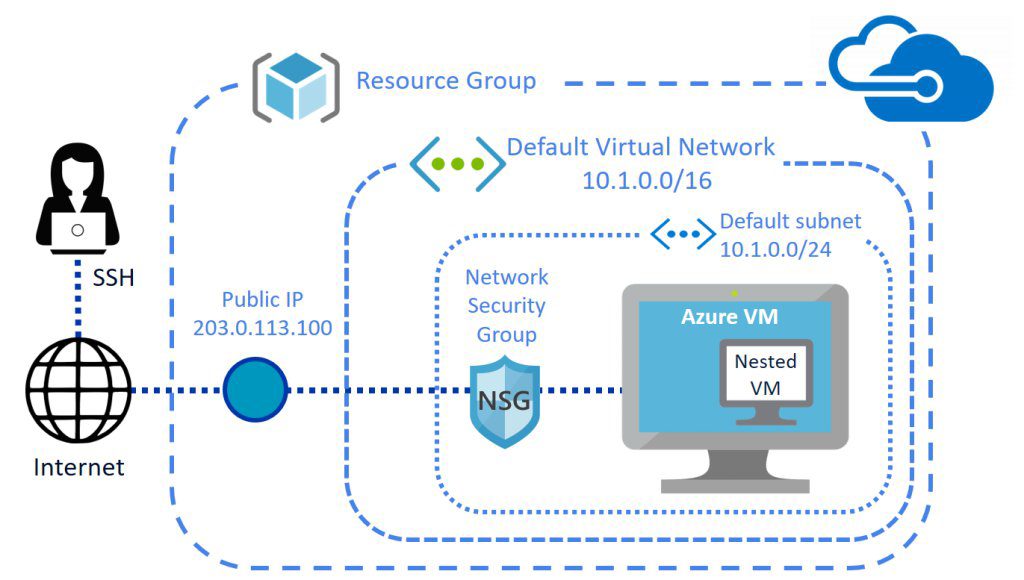
- Resource Groups: Logical containers that hold related resources for an application.
- Resources: Individual services like VMs, databases, or networks managed through ARM.
- ARM Templates: JSON-based files that define the infrastructure and configuration of your resources.
When you deploy a resource via the Azure portal, CLI, PowerShell, or SDKs, your request goes through the ARM API, which validates and orchestrates the deployment across Azure services.
Azure Resource Manager (ARM) – Azure Resource Manager (ARM) menjadi aspek penting yang dibahas di sini.
“Azure Resource Manager provides a consistent management layer that enables you to deploy, manage, and monitor all the resources for your solutions as a group.” — Microsoft Azure Documentation
Azure Resource Manager (ARM) Templates: The Heart of Infrastructure as Code
One of the most powerful features of Azure Resource Manager (ARM) is its support for Infrastructure as Code (IaC) through ARM templates. These JSON-based files allow you to define your entire cloud infrastructure in a declarative format, making deployments repeatable, version-controlled, and auditable.
Structure of an ARM Template
An ARM template follows a specific JSON schema with several key sections:
- $schema: Defines the template schema version.
- contentVersion: Helps track template versions.
- parameters: Inputs you can pass during deployment (e.g., VM size, location).
- variables: Reusable values derived from parameters or constants.
- resources: The actual Azure resources being deployed (e.g., VMs, networks).
- outputs: Values returned after deployment (e.g., public IP address).
Here’s a simplified example of an ARM template snippet:
Azure Resource Manager (ARM) – Azure Resource Manager (ARM) menjadi aspek penting yang dibahas di sini.
{
  "$schema": "https://schema.management.azure.com/schemas/2019-04-01/deploymentTemplate.json#",
  "contentVersion": "1.0.0.0",
  "parameters": {
    "storageAccountName": {
      "type": "string"
    }
  },
  "resources": [
    {
      "type": "Microsoft.Storage/storageAccounts",
      "apiVersion": "2021-04-01",
      "name": "[parameters('storageAccountName')]",
      "location": "eastus",
      "sku": {
        "name": "Standard_LRS"
      },
      "kind": "StorageV2"
    }
  ]
}
This template deploys a storage account using a parameterized name, ensuring flexibility across environments.
Benefits of Using ARM Templates
ARM templates offer numerous advantages for DevOps teams and cloud architects:
- Consistency: Eliminate manual errors by deploying the same configuration every time.
- Version Control: Store templates in Git repositories for audit trails and team collaboration.
- Reusability: Use the same template across dev, test, and production environments with different parameter files.
- Automation: Integrate with CI/CD pipelines using Azure DevOps, GitHub Actions, or Jenkins.
- Cost Efficiency: Reduce downtime and misconfigurations that lead to wasted resources.
For example, a company can maintain separate parameter files for each environment—dev.parameters.json, prod.parameters.json—while using the same base template.
Azure Resource Manager (ARM) – Azure Resource Manager (ARM) menjadi aspek penting yang dibahas di sini.
ARM Template Deployment Methods
You can deploy ARM templates using multiple tools and interfaces:
- Azure Portal: Use the “Deploy a custom template” option for quick testing.
- Azure CLI: Run
az deployment group createwith your template file. - Azure PowerShell: Use
New-AzResourceGroupDeploymentcmdlet. - REST API: Integrate ARM deployments into custom applications.
- Azure DevOps Pipelines: Automate deployments as part of release workflows.
Each method connects to the ARM API, ensuring consistent behavior regardless of the deployment tool.
Resource Groups and Organization in Azure Resource Manager (ARM)
Resource groups are fundamental to how Azure Resource Manager (ARM) organizes and manages resources. A resource group is a logical container that holds related resources for an Azure solution. All resources in a group share the same lifecycle, permissions, and deployment scope.
Azure Resource Manager (ARM) – Azure Resource Manager (ARM) menjadi aspek penting yang dibahas di sini.
Best Practices for Resource Group Design
Designing effective resource groups is crucial for operational efficiency and security. Consider these best practices:
- Group by Application or Workload: Place all resources for a specific app (e.g., web server, database, cache) in one group.
- Avoid Overloading: Don’t put all resources in a single group; it becomes unmanageable at scale.
- Align with Lifecycle: Resources that are deployed and deleted together should be in the same group.
- Use Naming Conventions: Adopt a standard like
rg-appname-environment-location(e.g.,rg-webapp-prod-eastus).
For instance, a retail company might have:
rg-inventory-dev-westusrg-inventory-prod-eastusrg-analytics-prod-centralus
This structure simplifies management, billing tracking, and access control.
Azure Resource Manager (ARM) – Azure Resource Manager (ARM) menjadi aspek penting yang dibahas di sini.
Managing Resource Lifecycles
One of the key benefits of resource groups is lifecycle management. When you delete a resource group, all resources within it are deleted. This is powerful for temporary environments like dev or test.
However, this also means you must be cautious. Accidental deletion can lead to data loss. To prevent this, Azure offers:
- Resource Locks: Prevent deletion or modification of critical resources.
- Soft Delete: For services like Key Vault or Storage, deleted data can be recovered within a retention period.
- Backup Policies: Use Azure Backup to protect VMs and databases before deletion.
Always apply locks to production resource groups to avoid unintended changes.
Azure Resource Manager (ARM) – Azure Resource Manager (ARM) menjadi aspek penting yang dibahas di sini.
Cross-Resource Group Dependencies
While resources should ideally reside in the same group, sometimes dependencies span groups. For example, a virtual machine in one group might need to access a database in another.
ARM supports cross-group references using functions like resourceId() in templates. Example:
[resourceId('other-resource-group', 'Microsoft.Sql/servers/databases', 'sqlsrv', 'mydb')]This allows flexible architecture while maintaining logical separation. However, excessive cross-group dependencies can complicate management, so design with care.
Azure Resource Manager (ARM) – Azure Resource Manager (ARM) menjadi aspek penting yang dibahas di sini.
Role-Based Access Control (RBAC) in Azure Resource Manager (ARM)
Security is paramount in cloud environments, and Azure Resource Manager (ARM) integrates tightly with Azure’s Role-Based Access Control (RBAC) system. RBAC allows you to grant precise permissions to users, groups, and applications at various scopes—subscription, resource group, or individual resource.
Understanding Built-in and Custom Roles
Azure provides a range of built-in roles such as:
- Owner: Full access, including permission to delegate access.
- Contributor: Can create and manage all resources, but cannot grant access.
- Reader: View-only access to resources.
- Virtual Machine Contributor: Manage VMs but not the network or storage they depend on.
For more granular control, you can create custom roles. For example, a “Network Viewer” role might allow reading network configurations but not modifying them.
Azure Resource Manager (ARM) – Azure Resource Manager (ARM) menjadi aspek penting yang dibahas di sini.
Roles are assigned using the Azure portal, CLI, or ARM templates, ensuring consistency across environments.
Scope and Inheritance in ARM RBAC
Permissions in ARM are hierarchical. A role assigned at the subscription level applies to all resource groups and resources within it. Similarly, a role at the resource group level applies to all resources in that group.
This inheritance model simplifies management but requires careful planning. Over-permissioning at higher levels can lead to security risks. Follow the principle of least privilege:
Azure Resource Manager (ARM) – Azure Resource Manager (ARM) menjadi aspek penting yang dibahas di sini.
- Assign roles at the lowest possible scope.
- Avoid assigning Owner roles unless absolutely necessary.
- Use Azure Policy to enforce role assignment rules.
For example, developers should have Contributor access only to their dev resource group, not the entire subscription.
Managing Service Principals and Managed Identities
Applications and automation scripts often need to interact with Azure resources. Instead of using user credentials, ARM supports service principals and managed identities.
- Service Principals: Identity for apps or services in Azure AD. Used with client secrets or certificates.
- Managed Identities: Automatically managed identities by Azure. No secrets to manage—ideal for VMs, App Services, or Functions.
When a VM has a managed identity, it can securely access a storage account without hardcoded credentials. This reduces the risk of secret leaks and simplifies rotation.
Azure Resource Manager (ARM) – Azure Resource Manager (ARM) menjadi aspek penting yang dibahas di sini.
Learn more about securing access via Azure RBAC documentation.
Deployment Modes in Azure Resource Manager (ARM)
When deploying ARM templates, you can choose between two deployment modes: Incremental and Complete. Understanding the difference is critical to avoid unintended deletions or configuration drift.
Incremental Deployment Mode
In incremental mode, ARM adds new resources and updates existing ones but does not delete resources that are not defined in the template.
Azure Resource Manager (ARM) – Azure Resource Manager (ARM) menjadi aspek penting yang dibahas di sini.
This mode is safer for iterative development and patching. For example, if your template defines a new storage account but not an existing VM, the VM remains untouched.
However, incremental mode can lead to “configuration drift” over time, where the actual environment diverges from the desired state defined in the template.
Complete Deployment Mode
In complete mode, ARM ensures the resource group matches the template exactly. Any resource not defined in the template is deleted during deployment.
Azure Resource Manager (ARM) – Azure Resource Manager (ARM) menjadi aspek penting yang dibahas di sini.
This mode enforces a true “desired state” model, making it ideal for environments where consistency is critical, such as production or compliance-sensitive systems.
Caution: Use complete mode only when you’re confident your template includes all required resources. Accidental omissions can lead to data loss.
Choosing the Right Deployment Mode
The choice between incremental and complete depends on your use case:
Azure Resource Manager (ARM) – Azure Resource Manager (ARM) menjadi aspek penting yang dibahas di sini.
- Development/Testing: Use incremental for flexibility.
- Production: Use complete mode with thorough validation and version-controlled templates.
- CI/CD Pipelines: Combine complete mode with automated testing to ensure safety.
You can specify the mode in CLI:
az deployment group create --mode Complete --template-file template.jsonOr in PowerShell:
New-AzResourceGroupDeployment -Mode Complete -TemplateFile template.jsonMonitoring and Governance with Azure Resource Manager (ARM)
Managing resources is only half the battle—monitoring and governance ensure they remain secure, compliant, and cost-effective. Azure Resource Manager (ARM) integrates with several Azure services to provide visibility and control.
Azure Resource Manager (ARM) – Azure Resource Manager (ARM) menjadi aspek penting yang dibahas di sini.
Azure Policy for Compliance Enforcement
Azure Policy allows you to create, assign, and manage policies that enforce organizational standards and assess compliance at scale.
For example, you can define policies such as:
- “All storage accounts must have encryption enabled.”
- “Virtual machines must use approved SKUs.”
- “Resources must have the ‘CostCenter’ tag.”
Policies are evaluated in real-time and during deployments. Non-compliant resources can be blocked or flagged for remediation.
Azure Resource Manager (ARM) – Azure Resource Manager (ARM) menjadi aspek penting yang dibahas di sini.
Policies are defined using JSON rules and can be scoped to management groups, subscriptions, or resource groups.
Explore policy definitions at Azure Policy official docs.
Azure Blueprints for Repeatable Environments
While ARM templates define infrastructure, Azure Blueprints go further by packaging templates, policies, role assignments, and resource groups into reusable blueprints.
Azure Resource Manager (ARM) – Azure Resource Manager (ARM) menjadi aspek penting yang dibahas di sini.
Use cases include:
- Onboarding new departments with pre-approved environments.
- Enforcing security baselines across subscriptions.
- Accelerating cloud adoption with standardized landing zones.
A blueprint can include:
- ARM templates for network and compute
- Policy assignments for compliance
- Role assignments for teams
- Resource groups with naming standards
Once published, blueprints can be assigned to subscriptions, ensuring consistency across the organization.
Azure Resource Manager (ARM) – Azure Resource Manager (ARM) menjadi aspek penting yang dibahas di sini.
Monitoring with Azure Monitor and Activity Log
ARM integrates with Azure Monitor and the Activity Log to provide operational insights.
- Activity Log: Tracks all write operations (PUT, POST, DELETE) on resources via ARM. Useful for auditing and troubleshooting.
- Azure Monitor: Collects metrics and logs from resources, enabling alerting and dashboards.
- Log Analytics: Query and analyze operational data using Kusto queries.
For example, if a VM is unexpectedly deleted, the Activity Log shows who deleted it, when, and from which IP address.
Set up alerts for critical operations like resource deletion or policy violations.
Azure Resource Manager (ARM) – Azure Resource Manager (ARM) menjadi aspek penting yang dibahas di sini.
Migrating to Azure Resource Manager (ARM): Strategies and Tools
While ARM is now the standard, some organizations still rely on the Classic deployment model. Migrating to ARM is essential for accessing modern features, automation, and support.
Assessment and Planning for Migration
Before migrating, assess your current environment:
- Inventory all Classic resources (VMs, storage, networks).
- Identify dependencies between services.
- Plan downtime windows for migration.
- Train teams on ARM concepts and tools.
Use the Azure Migration Assistant to evaluate readiness and get recommendations.
Azure Resource Manager (ARM) – Azure Resource Manager (ARM) menjadi aspek penting yang dibahas di sini.
Migration Tools and Processes
Azure provides tools to streamline migration:
- Azure Site Recovery: Migrate VMs with minimal downtime.
- Classic Deployment Migration Tool: Official tool to convert Classic resources to ARM (limited to certain resource types).
- Custom ARM Templates: Recreate environments using templates for full control.
Note: Not all Classic resources can be migrated in-place. Some require recreation in ARM.
Post-Migration Validation and Optimization
After migration, validate functionality and performance:
Azure Resource Manager (ARM) – Azure Resource Manager (ARM) menjadi aspek penting yang dibahas di sini.
- Test application connectivity and performance.
- Verify backups and disaster recovery plans.
- Apply Azure Policy and RBAC for governance.
- Optimize costs using Azure Cost Management.
Monitor the environment for a few weeks before decommissioning Classic resources.
What is Azure Resource Manager (ARM)?
Azure Resource Manager (ARM) is the deployment and management framework for Azure. It provides a consistent layer for creating, updating, and deleting resources, using templates for automation and governance.
Azure Resource Manager (ARM) – Azure Resource Manager (ARM) menjadi aspek penting yang dibahas di sini.
What are ARM templates?
ARM templates are JSON files that define the infrastructure and configuration of Azure resources. They enable Infrastructure as Code, allowing repeatable and automated deployments.
What is the difference between incremental and complete deployment modes?
Azure Resource Manager (ARM) – Azure Resource Manager (ARM) menjadi aspek penting yang dibahas di sini.
Incremental mode adds or updates resources without deleting others. Complete mode ensures the resource group exactly matches the template, deleting any extra resources.
Can I mix Classic and ARM resources?
Yes, Azure supports coexistence, but it’s not recommended. Migrate to ARM for better management, security, and automation.
Azure Resource Manager (ARM) – Azure Resource Manager (ARM) menjadi aspek penting yang dibahas di sini.
How do I secure my ARM deployments?
Use RBAC for access control, Azure Policy for compliance, managed identities for applications, and resource locks to prevent accidental deletion.
In conclusion, Azure Resource Manager (ARM) is the cornerstone of effective cloud management in Microsoft Azure. From enabling Infrastructure as Code with ARM templates to enforcing security through RBAC and governance via Azure Policy, ARM empowers organizations to build, manage, and scale cloud environments with confidence. Whether you’re a developer, architect, or operations team, mastering ARM is essential for leveraging Azure’s full potential. Start by organizing your resources into logical groups, adopt templates for consistency, and integrate governance controls early. The journey to a well-managed cloud begins with ARM.
Recommended for you 👇
Further Reading: