Cloud security can be overwhelming, but Azure Security Center makes it simpler, smarter, and more powerful than ever. Whether you’re managing a few virtual machines or an entire enterprise cloud infrastructure, this tool gives you the visibility and control you need—without the complexity.
Azure Security Center Overview
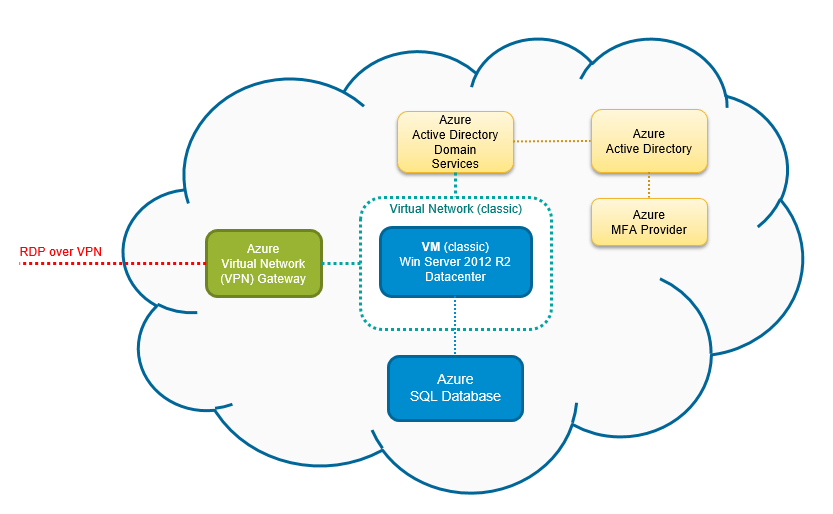
Azure Security Center is Microsoft’s unified infrastructure security management system, designed to strengthen the security posture of your cloud and hybrid environments. It’s not just a tool—it’s a comprehensive security operations hub that helps prevent, detect, and respond to threats across your Azure, on-premises, and multi-cloud workloads.
What Is Azure Security Center?
Azure Security Center (now part of Microsoft Defender for Cloud) is a cloud-native security platform that provides advanced threat protection for your Azure resources, hybrid systems, and even non-Microsoft clouds. It continuously monitors your environment, assesses security risks, and offers actionable recommendations to reduce vulnerabilities.
Originally launched as a standalone service, Azure Security Center has evolved into Microsoft Defender for Cloud, integrating deeper with Microsoft’s broader security ecosystem. This evolution allows for enhanced threat intelligence, automated response capabilities, and cross-platform visibility.
For organizations using Azure at scale, Security Center acts as the central nervous system of their security strategy. It integrates seamlessly with Azure Monitor, Azure Policy, and Log Analytics, enabling security teams to gain real-time insights and enforce compliance across their entire infrastructure.
Core Components of Azure Security Center
The platform is built around three core pillars: prevention, detection, and response. Each component works in harmony to provide end-to-end security coverage.
- Security Posture Management: Continuously assesses your resources against security best practices and compliance standards.
- Threat Protection: Uses AI-driven analytics and threat intelligence to detect suspicious activities and potential breaches.
- Security Automation: Enables automated remediation of vulnerabilities and integration with SOAR (Security Orchestration, Automation, and Response) platforms.
These components are supported by a robust data collection engine that pulls telemetry from virtual machines, containers, networks, and applications. This data is analyzed using machine learning models trained on Microsoft’s vast threat intelligence network—giving you insights that would be impossible to achieve with traditional tools.
“Azure Security Center transforms how organizations approach cloud security by combining deep visibility with intelligent automation.” — Microsoft Security Blog
Key Features of Azure Security Center
Azure Security Center stands out due to its rich feature set that caters to both security novices and seasoned professionals. From automated security assessments to advanced threat detection, the platform offers tools that scale with your environment.
Security Recommendations and Advisories
One of the most valuable features of Azure Security Center is its ability to generate real-time security recommendations. These are based on industry best practices, regulatory compliance requirements (like ISO 27001, NIST, and GDPR), and Microsoft’s own security benchmarks.
For example, if a virtual machine is missing endpoint protection or has open RDP ports, Security Center will flag it and suggest remediation steps. These recommendations are prioritized by severity, making it easier for teams to focus on high-risk issues first.
You can also customize these recommendations using Azure Policy. This allows organizations to define their own security baselines and enforce them across subscriptions. For instance, you can create a policy that automatically deploys antivirus software to any new VM created in a specific resource group.
Learn more about security policies at Microsoft Azure Policy Documentation.
Threat Detection with AI and Machine Learning
Azure Security Center leverages artificial intelligence to detect anomalies and potential threats that traditional signature-based systems might miss. By analyzing patterns in network traffic, user behavior, and system logs, it can identify indicators of compromise (IoCs) in real time.
The platform uses Microsoft’s global threat intelligence network—processing over 8 trillion signals daily—to enrich its detection capabilities. This means it can recognize known attack patterns, such as brute force attempts or malware communication, and also detect zero-day exploits through behavioral analysis.
For example, if a user account suddenly starts accessing multiple databases at unusual hours, Security Center can flag this as a potential insider threat or compromised credential. It then generates an alert with contextual details, including affected resources, timeline, and recommended actions.
This level of intelligence is powered by Microsoft Defender for Identity and Microsoft Sentinel integration, creating a unified security fabric across identities, endpoints, and cloud workloads.
Secure Score and Compliance Dashboard
Azure Security Center introduces the concept of a ‘Secure Score’—a量化 metric that reflects your overall security posture. Think of it like a credit score for your cloud environment: the higher the score, the better protected you are.
The Secure Score is calculated based on the number of security recommendations implemented versus the total number of applicable ones. It’s broken down by resource type (e.g., VMs, databases, networks), allowing teams to identify weak spots in their architecture.
Beyond the score, the compliance dashboard tracks adherence to over 100 regulatory standards and benchmarks. You can generate reports for auditors showing how your environment aligns with frameworks like HIPAA, SOC 2, or CIS Controls. This is invaluable for organizations undergoing compliance reviews or seeking certifications.
Explore the full list of compliance standards at Microsoft Compliance Documentation.
How Azure Security Center Enhances Cloud Security
As organizations migrate to the cloud, they face new security challenges—from misconfigured storage accounts to unpatched containers. Azure Security Center addresses these challenges by providing proactive, continuous monitoring and protection.
Continuous Vulnerability Assessment
Vulnerabilities are one of the leading causes of cloud breaches. Azure Security Center integrates with Qualys and Microsoft’s own vulnerability scanner to perform continuous assessments of your virtual machines and containers.
It checks for missing security updates, weak configurations, and known CVEs (Common Vulnerabilities and Exposures). When a vulnerability is detected, it’s displayed in the Security Center dashboard with severity level, affected systems, and remediation guidance.
For example, if a Linux VM is running an outdated version of OpenSSL vulnerable to Heartbleed, Security Center will flag it immediately. You can then patch the system directly from the portal or trigger an automated update via Azure Automation.
This proactive approach reduces the attack surface before hackers can exploit it. Unlike periodic scans, continuous assessment ensures that newly deployed resources are checked the moment they go live.
Just-in-Time VM Access
One of the most innovative features in Azure Security Center is Just-in-Time (JIT) VM access. It’s designed to minimize the exposure of management ports like RDP (3389) and SSH (22) to the public internet.
With JIT enabled, these ports are closed by default. When an administrator needs to connect, they must request access through the Security Center portal. The request is validated, and if approved, the firewall rules are temporarily opened for a specified period (e.g., 30 minutes) and from a specific IP address.
This significantly reduces the risk of brute force attacks and unauthorized access. Even if an attacker discovers your VM’s public IP, they won’t be able to reach the management ports unless access has been explicitly granted.
JIT access logs are also retained for audit purposes, providing a clear record of who accessed which VM and when. This supports compliance with regulations requiring access control documentation.
“Just-in-Time VM access is a game-changer for reducing attack surface in cloud environments.” — Azure Security Expert, TechCommunity
Network Security Monitoring
Azure Security Center provides deep visibility into network traffic patterns across your virtual networks. It monitors for suspicious activities such as port scanning, lateral movement, and data exfiltration attempts.
By integrating with Azure Firewall, Network Security Groups (NSGs), and Application Security Groups (ASGs), it can detect misconfigurations that could lead to data breaches. For instance, if a subnet is accidentally configured to allow unrestricted outbound traffic, Security Center will flag it as a high-risk issue.
Additionally, it supports integration with third-party firewalls and intrusion detection systems (IDS) through Azure Sentinel, enabling centralized monitoring of hybrid network environments. This is particularly useful for organizations with complex network architectures spanning multiple regions and clouds.
Integration with Microsoft Defender for Cloud
In 2021, Microsoft rebranded and expanded Azure Security Center into Microsoft Defender for Cloud. This evolution marks a strategic shift from a cloud security posture management tool to a full-fledged cloud workload protection platform (CWPP).
From Azure Security Center to Microsoft Defender for Cloud
The transition from Azure Security Center to Microsoft Defender for Cloud wasn’t just a name change—it represented a fundamental enhancement in capabilities. While the core functionality remains, the new platform adds advanced threat protection for servers, containers, and databases, powered by Microsoft Defender’s endpoint protection technology.
Defender for Cloud now includes built-in threat detection for Linux and Windows servers, whether they’re running in Azure, on-premises, or in AWS. It uses the same anti-malware engine found in Microsoft Defender Antivirus, providing real-time protection against viruses, ransomware, and spyware.
This unified approach allows organizations to manage security across hybrid environments from a single console. No more switching between different tools for cloud and on-premises protection.
Read more about the transition at Microsoft Defender for Cloud Overview.
Enhanced Protection for Servers and Containers
Microsoft Defender for Cloud extends protection to servers and containers through agent-based and agentless monitoring. For Azure VMs, it can deploy the Microsoft Monitoring Agent (MMA) or use agentless scanning to assess security posture without installing software.
For containers, it integrates with Azure Kubernetes Service (AKS) and other orchestration platforms to scan images for vulnerabilities, detect runtime threats, and enforce security policies. It can identify issues like privileged container execution, insecure API calls, or attempts to escape the container boundary.
This level of protection is critical as container adoption grows. A single misconfigured container can become a gateway for attackers to move laterally across your environment. Defender for Cloud helps prevent this by enforcing least-privilege principles and monitoring for anomalous behavior.
Cloud Security Posture Management (CSPM)
Cloud Security Posture Management is a core capability of Microsoft Defender for Cloud. It continuously assesses your cloud resources against security best practices and compliance standards, identifying misconfigurations that could lead to breaches.
For example, it can detect if an Azure Blob Storage account is publicly accessible or if a SQL database has Transparent Data Encryption (TDE) disabled. Each finding comes with a detailed explanation and step-by-step remediation instructions.
What sets Defender for Cloud apart is its ability to prioritize risks based on exploitability and business impact. Instead of overwhelming you with hundreds of low-severity alerts, it focuses on the issues that matter most—helping you allocate resources effectively.
Deployment Models: Agent-Based vs Agentless
Azure Security Center supports two primary deployment models for monitoring and protection: agent-based and agentless. Each has its own advantages and use cases, and understanding the difference is crucial for effective implementation.
Agent-Based Monitoring
Agent-based monitoring involves installing the Microsoft Monitoring Agent (MMA) or the newer Azure Monitor Agent (AMA) on your virtual machines. This agent collects detailed security data, including process activity, file integrity changes, and network connections.
The main advantage of agent-based monitoring is depth of visibility. Because the agent runs inside the guest OS, it can detect threats that occur at the application or kernel level—such as malware execution or privilege escalation attempts.
However, deploying agents at scale can be challenging, especially in environments with strict change control policies. It also requires managing agent updates and ensuring compatibility with different operating systems.
For organizations that require maximum security coverage, agent-based monitoring is the preferred choice—especially for production workloads and regulated systems.
Agentless Monitoring
Agentless monitoring, introduced in Microsoft Defender for Cloud, allows you to assess the security posture of Azure VMs without installing any software. It leverages the hypervisor layer to scan disk images and configuration settings.
This approach is faster to deploy and has zero impact on VM performance. It’s ideal for environments where agent installation is not permitted or for quickly assessing large numbers of non-critical systems.
While agentless monitoring provides excellent coverage for configuration and compliance issues, it lacks the real-time behavioral monitoring capabilities of agent-based solutions. Therefore, it’s best used as a complement—not a replacement—for agent-based protection.
Microsoft recommends using agentless monitoring for initial assessments and agent-based for ongoing protection of critical assets.
Automating Security with Azure Security Center
One of the biggest advantages of Azure Security Center is its ability to automate security tasks, reducing manual effort and response times. Automation is key to scaling security in dynamic cloud environments where resources are constantly being created and destroyed.
Automated Remediation of Security Recommendations
Azure Security Center allows you to automate the remediation of common security issues using Azure Policy and Logic Apps. For example, you can create a policy that automatically enables disk encryption on any new VM that doesn’t have it configured.
When a new resource is deployed, Security Center evaluates it against your policies. If it violates a rule, the system can automatically trigger a remediation action—such as applying a security baseline, enabling logging, or restricting network access.
This not only ensures consistent security enforcement but also reduces the burden on security teams. Instead of manually fixing hundreds of misconfigurations, they can focus on investigating advanced threats and improving overall strategy.
Integration with Azure Automation and Runbooks
For more complex workflows, Azure Security Center integrates with Azure Automation and PowerShell runbooks. You can create custom scripts that respond to specific alerts—for example, isolating a compromised VM, disabling a user account, or sending a notification to a Slack channel.
These runbooks can be triggered automatically when a high-severity alert is generated. This enables rapid incident response without human intervention, minimizing the window of opportunity for attackers.
Additionally, you can schedule regular security audits using runbooks—such as checking for inactive user accounts, reviewing firewall rules, or validating backup configurations.
Security Orchestration with Microsoft Sentinel
For enterprise-grade security orchestration, Azure Security Center integrates seamlessly with Microsoft Sentinel, Microsoft’s cloud-native SIEM and SOAR platform.
Sentinel ingests alerts from Security Center and correlates them with data from other sources—like Active Directory, Office 365, and third-party firewalls—to provide a holistic view of threats. It uses AI to reduce false positives and prioritize incidents based on risk.
You can create automated playbooks in Sentinel that respond to Security Center alerts. For example, when a VM is flagged for malware infection, Sentinel can automatically quarantine the machine, collect forensic data, and notify the security team—all within seconds.
This integration transforms Security Center from a monitoring tool into an active defense system, capable of responding to threats in real time.
Best Practices for Using Azure Security Center
To get the most out of Azure Security Center, it’s important to follow proven best practices. These guidelines will help you maximize security coverage, improve compliance, and reduce operational overhead.
Enable Standard and Advanced Protections
Azure Security Center offers two tiers: Free and Standard. The Free tier provides basic security posture management, while the Standard tier unlocks advanced threat protection, Just-in-Time access, and vulnerability scanning.
To achieve comprehensive protection, you should enable the Standard tier across all subscriptions. This ensures that all resources are monitored for threats and receive security recommendations.
You can enable the Standard tier at the subscription level or use Azure Policy to enforce it across multiple subscriptions. This is especially important in large organizations where different teams manage their own environments.
Use Resource Tags for Security Grouping
Tagging your Azure resources (e.g., VMs, databases, networks) is a powerful way to organize and manage security policies. You can use tags to group resources by environment (dev, test, prod), department, or sensitivity level.
Once tagged, you can apply security policies and monitoring rules to specific groups. For example, you might enforce stricter access controls on resources tagged as “PCI-Compliant” or enable enhanced logging for “Production” systems.
Tags also make it easier to generate compliance reports and track security metrics by business unit. They provide context that helps security teams prioritize their efforts.
Regularly Review Secure Score and Recommendations
Your Secure Score is a living metric that should be reviewed regularly—ideally on a weekly basis. Track your progress over time and set goals for improvement (e.g., increase score from 60% to 85% in 90 days).
Focus on resolving high-severity recommendations first, especially those related to network security, identity protection, and data encryption. Use the recommendation dashboard to assign tasks to team members and track completion.
Additionally, review the compliance dashboard to ensure your environment meets regulatory requirements. Generate reports for auditors and use them to demonstrate due diligence in security management.
What is Azure Security Center used for?
Azure Security Center is used to strengthen the security posture of cloud and hybrid environments by providing security recommendations, threat detection, and compliance monitoring. It helps organizations prevent, detect, and respond to threats across Azure, on-premises, and multi-cloud infrastructures.
Is Azure Security Center free?
Azure Security Center has a free tier that offers basic security posture management. However, advanced features like threat protection, Just-in-Time VM access, and vulnerability scanning require the Standard tier, which is billed based on resource usage.
How does Azure Security Center integrate with other tools?
Azure Security Center integrates with Microsoft Defender for Cloud, Azure Sentinel, Azure Policy, and Log Analytics. It also supports third-party tools through APIs and connectors, enabling centralized security management across hybrid and multi-cloud environments.
Can Azure Security Center protect on-premises servers?
Yes, Azure Security Center (via Microsoft Defender for Cloud) can protect on-premises servers by connecting them through Azure Arc. This allows you to monitor and secure non-Azure machines using the same policies and dashboards as your cloud resources.
What is the difference between Azure Security Center and Microsoft Defender for Cloud?
Azure Security Center was rebranded and enhanced into Microsoft Defender for Cloud in 2021. The new platform includes all the features of the original Security Center plus advanced threat protection for servers, containers, and databases, powered by Microsoft Defender’s endpoint security technology.
In conclusion, Azure Security Center—now evolved into Microsoft Defender for Cloud—is a powerful, intelligent, and scalable solution for securing modern cloud environments. Its ability to provide unified visibility, automated protection, and deep threat intelligence makes it an essential tool for any organization using Azure. By leveraging its features effectively, you can significantly reduce your risk of cyberattacks, meet compliance requirements, and build a resilient security posture that evolves with your infrastructure.
Further Reading:
