Welcome to the world of cloud computing, where Azure Virtual Machines stand as a cornerstone of modern IT infrastructure. Scalable, secure, and highly flexible, they empower businesses to run workloads seamlessly in the cloud.
What Are Azure Virtual Machines?

Azure Virtual Machines (VMs) are on-demand, scalable computing resources provided by Microsoft Azure that allow users to run a wide variety of operating systems and applications in the cloud. Unlike physical servers, these virtualized environments offer flexibility, cost-efficiency, and rapid deployment, making them ideal for both development and production workloads.
Core Components of an Azure VM
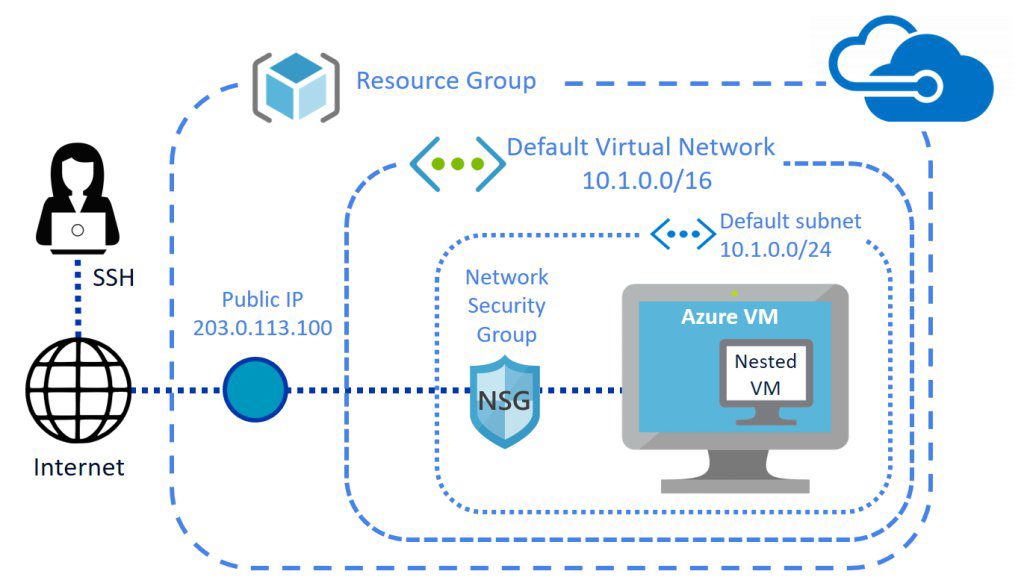
Every Azure Virtual Machine is built using several foundational components that define its performance, availability, and connectivity. Understanding these elements is crucial for effective deployment and management.
- Compute Instance: The virtual CPU and memory allocation that determines processing power.
- Storage: Managed disks (SSD or HDD) that store the OS, applications, and data.
- Networking: Virtual networks, public IP addresses, and network security groups (NSGs) that control traffic.
- Image: The pre-configured OS or application template used to launch the VM (e.g., Windows Server, Ubuntu, or custom images).
“Azure Virtual Machines give you the flexibility of virtualization without the need to buy and maintain the physical hardware.” — Microsoft Azure Documentation
Differences Between VMs and Physical Servers
While traditional physical servers require dedicated hardware, maintenance, and physical space, Azure Virtual Machines operate in Microsoft’s global data centers, abstracting the underlying hardware.
- Scalability: VMs can be resized or scaled horizontally in minutes; physical servers require hardware upgrades.
- Cost: Pay-as-you-go pricing reduces upfront capital expenditure (CapEx).
- Availability: Built-in redundancy and availability zones enhance uptime.
- Deployment Speed: A new VM can be provisioned in under five minutes.
Key Benefits of Using Azure Virtual Machines
Azure Virtual Machines offer a powerful blend of performance, flexibility, and integration with other Azure services. These benefits make them a top choice for enterprises, startups, and developers alike.
1. Scalability and Elasticity
One of the most compelling advantages of Azure Virtual Machines is their ability to scale on demand. Whether you’re experiencing a traffic spike or planning for seasonal growth, Azure allows you to adjust compute resources instantly.
- Vertical Scaling: Change VM size (e.g., from Standard_B2s to Standard_D4s) to increase CPU or RAM.
- Horizontal Scaling: Use Virtual Machine Scale Sets to deploy and manage multiple identical VMs automatically.
- Auto-Scaling: Configure rules based on CPU usage, network traffic, or custom metrics to add or remove instances dynamically.
This elasticity ensures optimal performance during peak loads while minimizing costs during low-usage periods.
2. Cost Efficiency and Flexible Pricing
Azure offers multiple pricing models to suit different workloads and budgets, helping organizations optimize their cloud spending.
- Pay-As-You-Go: Pay only for the compute time used, ideal for variable or short-term workloads.
- Reserved Instances: Save up to 72% by committing to 1- or 3-year terms for predictable workloads.
- Spot VMs: Use unused Azure capacity at up to 90% discount—perfect for fault-tolerant, batch-processing jobs.
- Hybrid Benefit: Leverage existing Windows Server or SQL Server licenses to reduce costs.
Tools like the Azure Pricing Calculator help estimate costs before deployment.
3. High Availability and Disaster Recovery
Azure ensures business continuity through built-in redundancy and disaster recovery options.
- Availability Sets: Distribute VMs across fault and update domains to protect against hardware failures.
- Availability Zones: Deploy VMs in physically separate data centers within a region for zone redundancy.
- Site Recovery: Replicate on-premises or Azure VMs to a secondary region for failover during outages.
These features help achieve 99.95% or higher SLA for critical applications.
Types of Azure Virtual Machines
Microsoft Azure offers a wide range of VM types tailored to specific workloads, from general-purpose computing to high-performance computing (HPC). Choosing the right type is essential for performance and cost optimization.
General Purpose VMs
These VMs balance CPU, memory, and disk performance, making them ideal for small to medium applications, development environments, and web servers.
- Series: B-series (burstable), D-series (balanced performance).
- Use Cases: Dev/test environments, low-traffic websites, microservices.
- Example: Dv4 and Dsv4 series offer improved performance per core.
Compute Optimized VMs
Designed for CPU-intensive tasks, these VMs provide high-performance processors and are ideal for batch processing, gaming servers, and scientific simulations.
- Series: F-series (Intel), H-series (HPC).
- Features: High clock speeds, low latency, and optimized for parallel processing.
- Use Case: Financial modeling, media encoding, and high-frequency trading platforms.
Memory Optimized VMs
These VMs are built for workloads that require large amounts of RAM, such as in-memory databases and real-time analytics.
- Series: E-series, M-series (ultra-high memory).
- Example: Mv2 and M-series VMs support up to 3.8 TB of RAM.
- Applications: SAP HANA, SQL Server, Oracle databases.
For more details, visit the Azure VM sizes documentation.
How to Deploy an Azure Virtual Machine
Deploying an Azure Virtual Machine is a straightforward process that can be done through the Azure portal, CLI, PowerShell, or Infrastructure as Code (IaC) tools like Terraform and ARM templates.
Step-by-Step Deployment via Azure Portal
The Azure portal provides a user-friendly interface for creating and managing VMs.
- Step 1: Sign in to the Azure Portal.
- Step 2: Click “Create a resource” and search for “Virtual Machine”.
- Step 3: Choose an image (e.g., Windows Server 2022, Ubuntu 22.04 LTS).
- Step 4: Select a VM size based on your workload needs.
- Step 5: Configure settings: resource group, virtual network, subnet, public IP, and NSG.
- Step 6: Set up administrator credentials (username and password or SSH key).
- Step 7: Review and create the VM.
Deployment typically completes within 2–5 minutes.
Automated Deployment with Azure CLI
For DevOps teams, automation is key. The Azure CLI allows scriptable, repeatable deployments.
- Install the Azure CLI on your local machine or use Azure Cloud Shell.
- Run the following command to create a VM:
az vm create
–resource-group myResourceGroup
–name myVM
–image Ubuntu2204
–admin-username azureuser
–generate-ssh-keys
This command creates a Linux VM with SSH access, all from the command line.
Azure Virtual Machines – Azure Virtual Machines menjadi aspek penting yang dibahas di sini.
Infrastructure as Code with Terraform
Terraform enables version-controlled, reproducible infrastructure. Here’s a basic example:
provider “azurerm” {
features {}
}resource “azurerm_resource_group” “example” {
name = “myRG”
location = “East US”
}resource “azurerm_virtual_network” “example” {
name = “myVNet”
address_space = [“10.0.0.0/16”]
location = azurerm_resource_group.example.location
resource_group_name = azurerm_resource_group.example.name
}
Using IaC ensures consistency across environments and supports CI/CD pipelines.
Managing and Monitoring Azure Virtual Machines
Once deployed, effective management and monitoring are essential to maintain performance, security, and cost control.
Using Azure Monitor for Performance Insights
Azure Monitor collects telemetry from VMs, including CPU, memory, disk, and network usage.
- Metrics: View real-time performance data in the Azure portal.
- Logs: Use Log Analytics to query and analyze VM logs.
- Alerts: Set up notifications for high CPU usage, low disk space, or failed login attempts.
For example, you can create an alert rule that triggers when CPU usage exceeds 80% for 5 minutes.
Automation with Azure Automation and Runbooks
Automate routine tasks like starting/stopping VMs, patching, and backups.
- Scheduled Start/Stop: Reduce costs by shutting down non-production VMs outside business hours.
- Patch Management: Use Azure Update Management to deploy OS updates across multiple VMs.
- Runbooks: PowerShell or Python scripts that automate complex workflows.
Learn more at Azure Automation documentation.
Security and Compliance with Azure Defender
Azure Defender (part of Microsoft Defender for Cloud) provides advanced threat protection for Azure Virtual Machines.
- Threat Detection: Identifies suspicious activities like brute-force attacks or malware.
- Just-in-Time VM Access: Reduces exposure by closing management ports until access is requested.
- Security Recommendations: Offers actionable advice to harden VM configurations.
Enabling Defender helps meet compliance standards like ISO 27001, HIPAA, and GDPR.
Networking and Connectivity for Azure VMs
Proper networking configuration is critical for VM performance, security, and integration with other services.
Virtual Networks and Subnets
Azure Virtual Networks (VNet) isolate and segment VMs, enabling secure communication.
- Private IP Addresses: Assigned from the VNet address space.
- Subnets: Divide the network for different tiers (e.g., web, app, database).
- Network Security Groups (NSGs): Act as firewalls to control inbound and outbound traffic.
You can also peer VNets across regions or subscriptions for hybrid connectivity.
Public IP and Load Balancing
To make VMs accessible from the internet, assign a public IP address.
- Static vs Dynamic IPs: Static IPs remain constant; dynamic IPs may change after deallocation.
- Azure Load Balancer: Distributes traffic across multiple VMs for high availability.
- Application Gateway: Offers layer 7 (HTTP/HTTPS) load balancing with SSL termination.
For high-traffic applications, combining VM Scale Sets with a load balancer ensures scalability and reliability.
Hybrid Connectivity with ExpressRoute and VPN
Organizations often need to connect Azure VMs to on-premises networks.
- Azure VPN Gateway: Secure site-to-site or point-to-site connections over the public internet.
- ExpressRoute: Private, high-speed connection with SLA-backed performance.
- Use Case: Extend Active Directory, access on-prem databases, or migrate workloads gradually.
ExpressRoute offers faster speeds and lower latency than public internet-based VPNs.
Backup and Disaster Recovery for Azure VMs
Data loss or VM failure can be catastrophic. Azure provides robust backup and recovery solutions.
Azure Backup for VMs
Azure Backup offers automated, encrypted, and scalable backup for both Windows and Linux VMs.
- Recovery Points: Store backups for days, months, or years based on policy.
- Incremental Backups: Only changed data is backed up after the initial full backup.
- Self-Service Restore: Restore entire VMs or individual files quickly.
Backups are stored in Recovery Services vaults and can be geo-replicated for added resilience.
Site Recovery for Business Continuity
Azure Site Recovery (ASR) enables disaster recovery by replicating VMs to a secondary region.
- Replication: Continuous sync of VM changes to a recovery region.
- Failover: Switch to the secondary region during an outage.
- Failback: Return to the primary region once restored.
ASR supports both Azure-to-Azure and on-premises-to-Azure scenarios.
Azure Virtual Machines – Azure Virtual Machines menjadi aspek penting yang dibahas di sini.
Testing Recovery Plans
Regularly test your disaster recovery plan without impacting production.
- Create a test failover in an isolated network.
- Validate application functionality and data integrity.
- Ensure compliance with RTO (Recovery Time Objective) and RPO (Recovery Point Objective).
Testing ensures confidence in your recovery strategy during real incidents.
Best Practices for Optimizing Azure Virtual Machines
To get the most out of Azure Virtual Machines, follow these proven best practices.
Select the Right VM Size and Type
Right-sizing prevents overprovisioning and reduces costs.
- Monitor performance metrics to identify underutilized VMs.
- Use Azure Advisor to get recommendations on resizing.
- Consider burstable B-series VMs for low-to-moderate workloads.
Implement Tagging and Resource Organization
Tags help organize resources for billing, governance, and automation.
- Use tags like
Environment=Production,Owner=DevOps, orCostCenter=Marketing. - Apply tags during deployment or in bulk via PowerShell.
- Use Azure Policy to enforce tagging compliance.
Secure VMs with Least Privilege and JIT Access
Minimize attack surface by restricting access.
- Use Role-Based Access Control (RBAC) to assign minimal permissions.
- Enable Just-in-Time (JIT) access to limit open ports.
- Regularly rotate credentials and use Azure Key Vault for secrets.
Automate Lifecycle Management
Use automation to start, stop, patch, and decommission VMs.
- Schedule non-production VMs to shut down at night.
- Use Azure Update Management for patch compliance.
- Implement auto-scaling for variable workloads.
Monitor and Optimize Costs
Cloud costs can spiral without proper oversight.
- Use Azure Cost Management to track spending by resource, department, or tag.
- Identify idle or underutilized VMs for deletion or resizing.
- Leverage Reserved Instances for long-term workloads.
What are Azure Virtual Machines used for?
Azure Virtual Machines are used to run a wide range of workloads in the cloud, including web servers, databases, development and testing environments, enterprise applications, and high-performance computing (HPC) tasks. They provide the flexibility of on-premises servers without the need for physical hardware.
How much do Azure Virtual Machines cost?
Costs vary based on VM size, type, region, and usage. Prices start from as low as $0.004/hour for B1ls burstable VMs to thousands per hour for high-memory M-series instances. You can use the Azure Pricing Calculator to estimate costs based on your configuration.
Can I run Linux on Azure Virtual Machines?
Yes, Azure supports a wide range of Linux distributions, including Ubuntu, Red Hat Enterprise Linux, CentOS, SUSE, and Debian. You can deploy from Azure Marketplace images or upload your own custom VHD.
How do I secure my Azure VMs?
You can secure Azure VMs using Network Security Groups (NSGs), Azure Defender, Just-in-Time (JIT) access, disk encryption, and Role-Based Access Control (RBAC). Regular patching and monitoring with Azure Monitor also enhance security.
What is the difference between Availability Set and Availability Zone?
An Availability Set ensures VMs are distributed across fault and update domains within a data center. An Availability Zone spans physically separate data centers within a region, offering higher resilience against data center failures.
Azure Virtual Machines are a cornerstone of Microsoft’s cloud platform, offering unmatched flexibility, scalability, and integration. Whether you’re migrating legacy systems, building cloud-native apps, or running high-performance workloads, Azure VMs provide the infrastructure you need. By leveraging best practices in deployment, security, monitoring, and cost management, organizations can maximize performance and minimize risk. With continuous innovation from Microsoft, Azure Virtual Machines remain a powerful choice for modern IT environments.
Azure Virtual Machines – Azure Virtual Machines menjadi aspek penting yang dibahas di sini.
Further Reading:
